Do You Need Both? Exploring the Necessities of Professional vs. General Liability Insurance

In today’s complex business landscape, understanding insurance is crucial for safeguarding your assets. When it comes to liability coverage, the question often arises: Do you need both professional and general liability insurance? Exploring these insurances can help you determine the best coverage for your business needs and ensure you’re adequately protected.
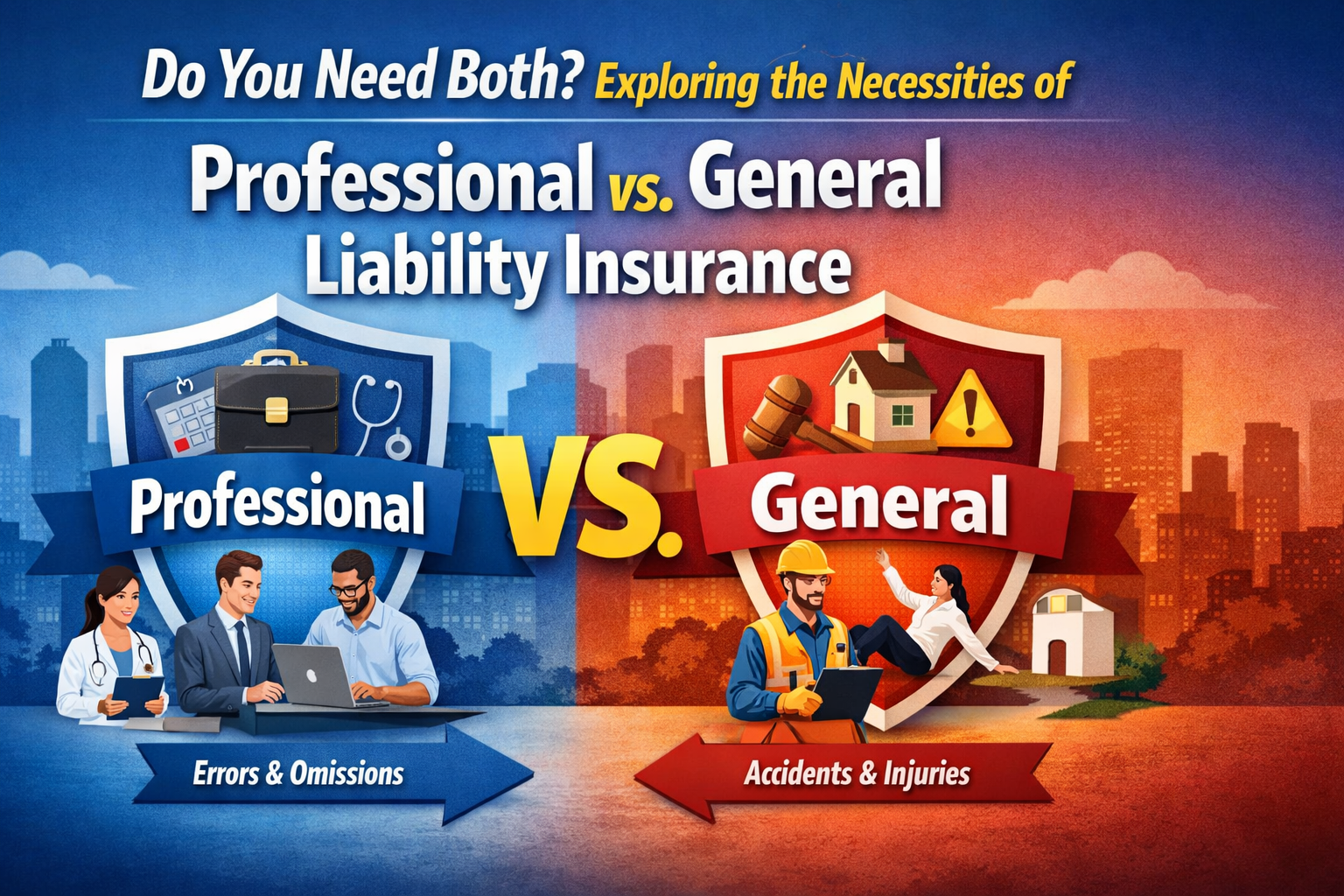
Professional liability insurance and general liability insurance serve different purposes, protecting businesses from distinct types of risks. While general liability coverage focuses on third-party claims related to bodily injury or property damage, professional liability is tailored for professionals who offer services or advice. This blog explores the necessity of both types of insurance, highlighting their individual roles and importance.
Understanding the Basics of General Liability Insurance
General liability insurance is often seen as a fundamental business insurance policy. It protects companies from claims made by clients or the public in relation to bodily injury, property damage, and personal injury, such as slander or libel. The coverage usually includes legal defense costs that arise from these claims, providing a safety net for businesses operating in various industries.
For any business owner, understanding how general liability insurance works is vital. In cases where a customer slips and falls on your store’s premises or if your product causes damage to someone’s property, general liability insurance would cover the legal fees and settlements related to such claims. This type of insurance is a best practice for businesses of all sizes and sectors, whether you’re running a small retail store or a large construction company.
The Importance of Professional Liability Insurance

Unlike general liability insurance, professional liability insurance, also known as errors and omissions insurance, focuses specifically on the services your business provides. It protects you against claims made by clients due to negligence, errors, or omissions in the professional services you offer. This is especially crucial for service-oriented businesses such as consultants, accountants, and healthcare providers, where advice and recommendations can lead to substantial claims.
In industries where intellectual work is paramount, such as tech and creative sectors, the risks associated with providing professional services can be significant. A single lawsuit regarding negligence could result in financial ruin for a small business. Professional liability insurance steps in to cover legal fees, settlements, and judgments, ensuring that your business remains operational even in dire circumstances.
Awareness of the potential claims against your professional services helps underscore the importance of this type of insurance. Each industry presents unique challenges and risks, which is why tailored coverage options are essential. Investing in professional liability insurance is not just a precaution; it’s a critical component of your business risk management strategy.
Choosing Between the Two: Factors to Consider

When determining whether to opt for general liability or professional liability insurance—or both—several factors come into play. First and foremost, assess your business structure and the nature of your operations. For instance, if you operate a restaurant, general liability insurance is essential due to the high likelihood of customer-related incidents. Conversely, if you’re a consultant providing specialized advice, professional liability insurance should take precedence.
Additionally, consider the specific risks associated with your industry. Certain industries may require one type of insurance over the other, while others may benefit from having both. For example, in the construction field, general liability insurance covers on-site accidents, while professional liability protects against claims of design flaws or project delays.
Cost is another vital consideration. Premiums for general liability insurance are generally lower than those for professional liability insurance due to the broader risks covered. However, failing to secure appropriate coverage could lead to catastrophic financial repercussions. To find the best balance of coverage, it may be beneficial to consult with an insurance advisor who understands your unique needs.
Why Having Both Insurances is Often Essential

While you may try to choose only one type of liability coverage based on your business needs, having both general and professional liability insurance is often the wisest decision. This dual-layered protection safeguards against the full range of liabilities that a business might encounter. For example, an advertising agency must be concerned not only about potential accidents during events (covered by general liability insurance) but also about lawsuits stemming from potential regulatory violations or advice considered to be damaging (covered by professional liability insurance).
Moreover, having both insurances can provide a stronger foundation for your business. Clients and customers often prefer businesses that are fully insured, seeing it as a marker of reliability. This can give you an edge in competitive industries, where trust and reputation are your most valuable assets. An organized approach to managing risks will promote growth and sustainability, proving that investing in both types of insurance is worthwhile.
A combination of both insurance types also strengthens your overall risk management strategy. Each policy complements the other, ensuring comprehensive coverage so that you can focus on what matters most—running your business. By mitigating the financial risks associated with your operations, you can operate without trepidation, dedicated to providing exceptional services or products to your customers.
Conclusion: A Comprehensive Coverage Approach
In conclusion, understanding the dichotomy between professional and general liability insurance is a priority for any business owner looking to protect their assets and operations. The decision of whether to invest in one or both types of coverage should hinge on a careful assessment of your business’s specific risks and needs. Formulating a comprehensive coverage approach ensures that your business can withstand the uncertainties of today’s marketplace.
Evaluating your industry, the nature of your services, and the risks involved should guide your decision. Ultimately, having both forms of liability insurance provides the broadest spectrum of protection and peace of mind. Ensure that you’re covered, so you can focus on growing and enhancing your business while minimizing the risks of financial loss due to unforeseen claims.











Post Comment